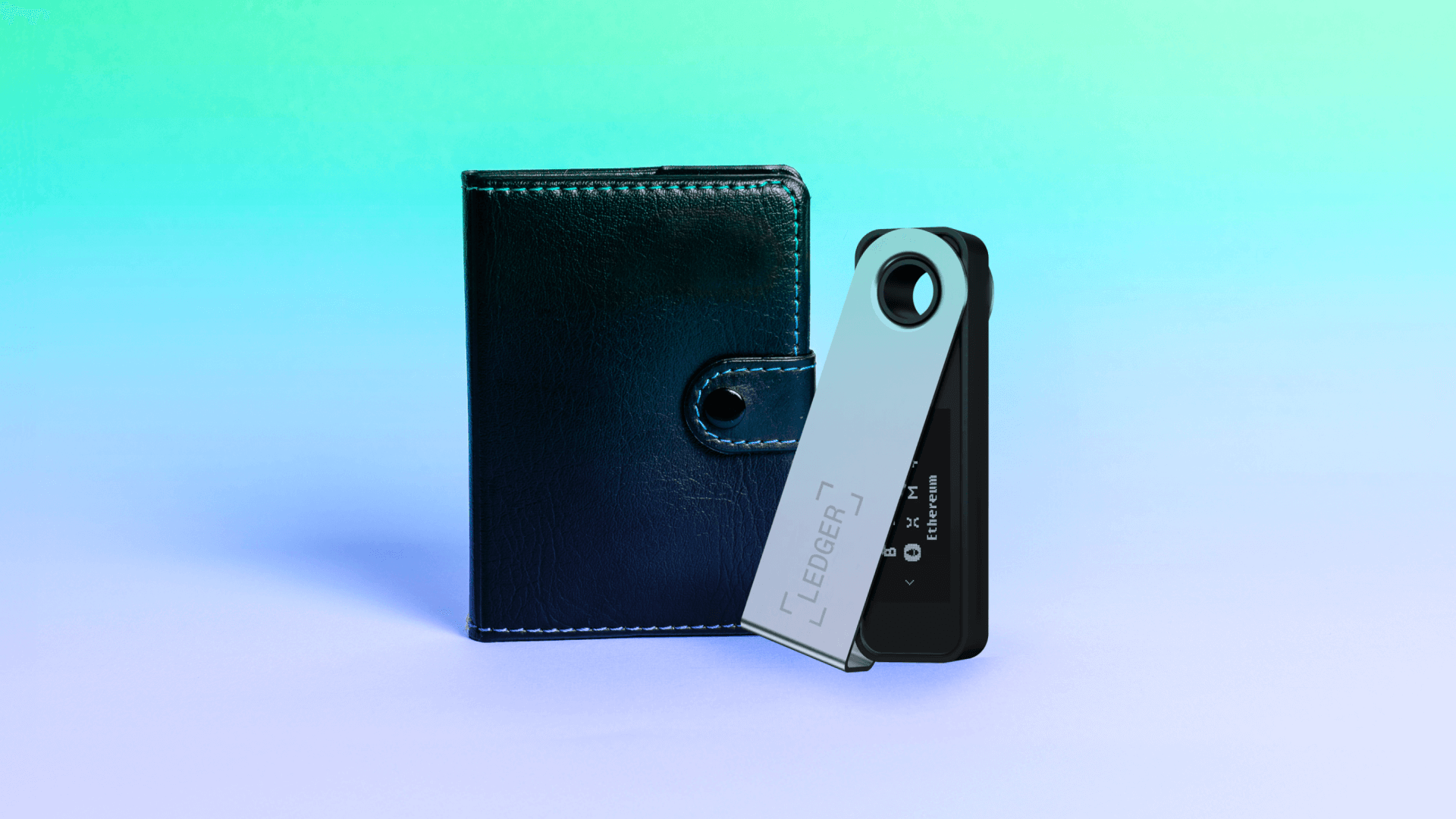
Wallet
A digital tool used to store, send, and receive cryptocurrencies, securing your private keys and managing your blockchain assets.
What is a crypto wallet and how does it work?
A crypto wallet is a digital application that manages your cryptographic keys and enables you to interact with blockchain networks, though it doesn't actually "store" cryptocurrency in the traditional sense. Instead, your funds exist on the blockchain itself, and your wallet stores the private keys that prove ownership and allow you to control those assets. Think of your wallet like a digital keychain that holds the keys to your various blockchain accounts, enabling you to prove ownership and authorize transactions without revealing your secret information.
Unlike traditional wallets that hold physical cash, crypto wallets are more like secure digital interfaces that connect you to the decentralized world of blockchain networks. When you "send" cryptocurrency to someone, you're actually broadcasting a cryptographically signed message to the network that transfers ownership from your address to theirs. Your wallet handles all the complex cryptography behind the scenes, making it as simple as entering an address and amount, while ensuring your private keys never leave your device in a properly designed non-custodial wallet.
How do crypto wallets manage keys and transactions?
Crypto wallets operate through sophisticated cryptographic systems that generate and manage pairs of mathematically linked keys for each account. Your private key is a secret number that must be kept absolutely secure, while your public key generates your wallet address that others can use to send you cryptocurrency. When you make a transaction, your wallet uses your private key to create a digital signature that proves you own the funds without revealing the private key itself.
Modern wallets use seed phrases (also called recovery phrases) consisting of 12-24 randomly generated words that serve as a master key to regenerate all your accounts and private keys. This system allows you to back up your entire wallet with just these words and restore access to all your accounts on any compatible device if your original wallet is lost or damaged. The wallet software handles the complex process of deriving different private keys for multiple accounts from this single seed phrase, enabling you to manage numerous cryptocurrency addresses across different blockchain networks from one interface.
Critical security note: Your seed phrase is the ultimate key to your funds. Anyone who obtains it can access all your assets. Never share it, never enter it on websites (legitimate services never ask for it), and store it securely offline.
Why are wallets essential for Web3 participation?
Wallets are the fundamental infrastructure that enables individual sovereignty and direct participation in Web3 without requiring permission from centralized institutions. Unlike traditional financial services, where banks control your accounts and can freeze or restrict your access, non-custodial wallets ensure that you maintain complete control over your digital assets and identity. This enables participation in global financial systems regardless of your geographic location, banking relationships, or government policies.
Wallets = your Web3 passport
Beyond simple storage and transactions, modern wallets serve as your authentication and identity layer for the entire Web3 ecosystem. They enable you to:
- Connect to decentralized applications (dapps) without creating accounts or providing personal information
- Participate in governance votes for protocols and DAOs you hold tokens in
- Stake tokens to help secure networks and earn rewards
- Provide liquidity to decentralized exchanges and earn trading fees
- Interact with smart contracts across multiple blockchain networks
- Prove ownership of NFTs, credentials, or other digital assets
- Sign messages to authenticate your identity cryptographically
Your wallet becomes your passport to a permissionless global economy where you can access financial services, social networks, gaming platforms, and digital marketplaces without creating separate accounts or trusting centralized platforms with your data.
This self-custody model represents a fundamental shift from the traditional internet, where platforms control user accounts and data, to Web3, where individuals control their own digital identity and assets through cryptographic proof rather than institutional trust. You become your own bank, your own identity provider, and your own data custodian—with both the freedom and responsibility that entails.
Types of wallets and security considerations
Crypto wallets come in several forms, each offering different balances of security, convenience, and functionality:
- Hot wallets: Software applications on internet-connected devices (mobile apps, browser extensions, desktop software) that offer convenience for frequent transactions and dApp interactions but have higher security risks due to online connectivity
- Cold wallets: Hardware devices or offline software that store private keys without internet connectivity, providing maximum security for long-term storage but less convenient for regular use
- Custodial wallets: Services where third parties control your private keys (like exchange wallets), offering simplicity but requiring trust in the service provider and sacrificing self-custody benefits
- Non-custodial wallets: Applications where you control your own private keys, providing full ownership and responsibility for security but requiring more technical understanding and careful backup procedures
- Multi-signature (multisig) wallets: Require multiple private keys to authorize transactions
Security best practices include storing seed phrases offline in secure locations, using hardware wallets for large amounts, enabling additional security features like biometric authentication, and never sharing private keys or seed phrases with anyone. The choice between different wallet types often involves trade-offs between security, convenience, and functionality based on your specific needs and technical comfort level.
Discover secure, user-friendly wallets designed specifically for the Polkadot ecosystem, with built-in staking, governance, and dapp connectivity: Get a Polkadot Wallet.