Building the future of decentralized marketing: a case study
Polkadot’s decentralized marketing sets the standard for Web3 growth. With OpenGov, bounties, and community tools, contributors are empowered to innovate, ensuring consistent, impactful campaigns and showcasing the potential of decentralized ecosystems.
 By Natalie Tillack•December 16, 2024
For decentralization to be more than just a buzzword, it needs to be embedded in an ecosystem’s DNA - and that of its core contributors. Polkadot, the foundation for a more open and collaborative web, shows the world that decentralization can extend beyond technology and into the organizational design behind the protocol itself. As the biggest DAO in the world with about 1.3 million members, Polkadot is building a decentralized ecosystem for its commercial functions and is setting a new standard for how Web3 projects promote themselves, grow their communities, and innovate.
Why decentralized marketing?
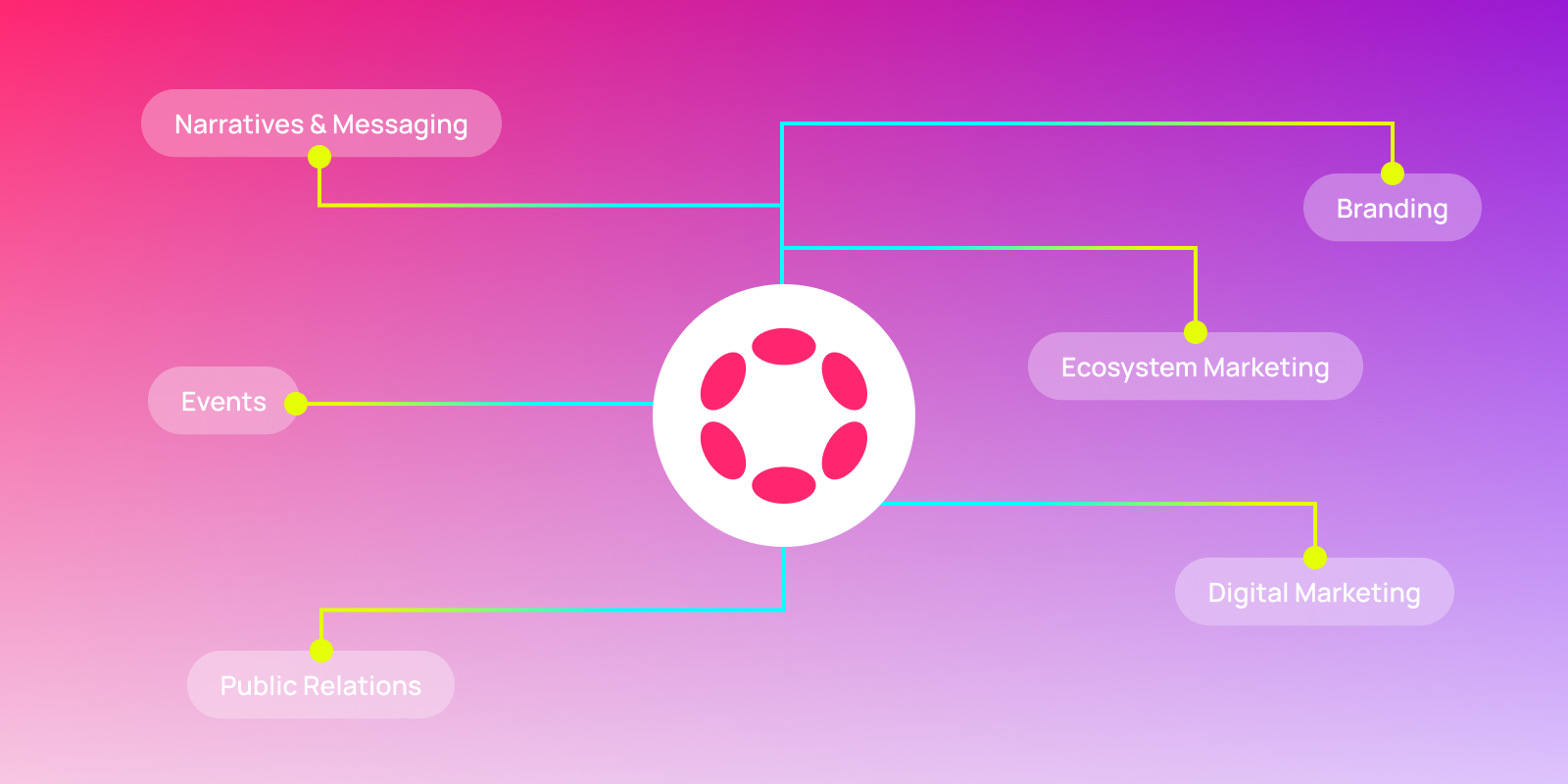
Decentralization is not just about how nodes are distributed but also how financial or strategic decisions are made. Until about a year ago, the go-to-market (GTM) functions for Polkadot were mainly run from within Parity Technologies. Polkadot’s commitment to decentralization runs deep, though, influencing not just its technical architecture but also how it engages its audience. In the traditional marketing world, campaigns are controlled from the top down. But Polkadot is flipping the script, putting the power in the hands of its community while gradually introducing a more structured and strategic approach. This decentralized approach allows for a more diverse, creative, and dynamic marketing environment—one that truly reflects the spirit of Web3.
The technical backbone for decentralized decision making: a best-in-class governance design
In June 2023, Polkadot’s new governance standard, OpenGov, was introduced, the most advanced system of its type in Web3. It removed the last points of centralization from its predecessor, Governance v1, namely the Technical Committee and the Council. All decisions are made and enacted completely onchain, and even the code is governed by the community. An expert self-governing body known as the Technical Fellowship hosts public discussions on upgrades but holds no special voting rights.
A marketing ecosystem powered by the community
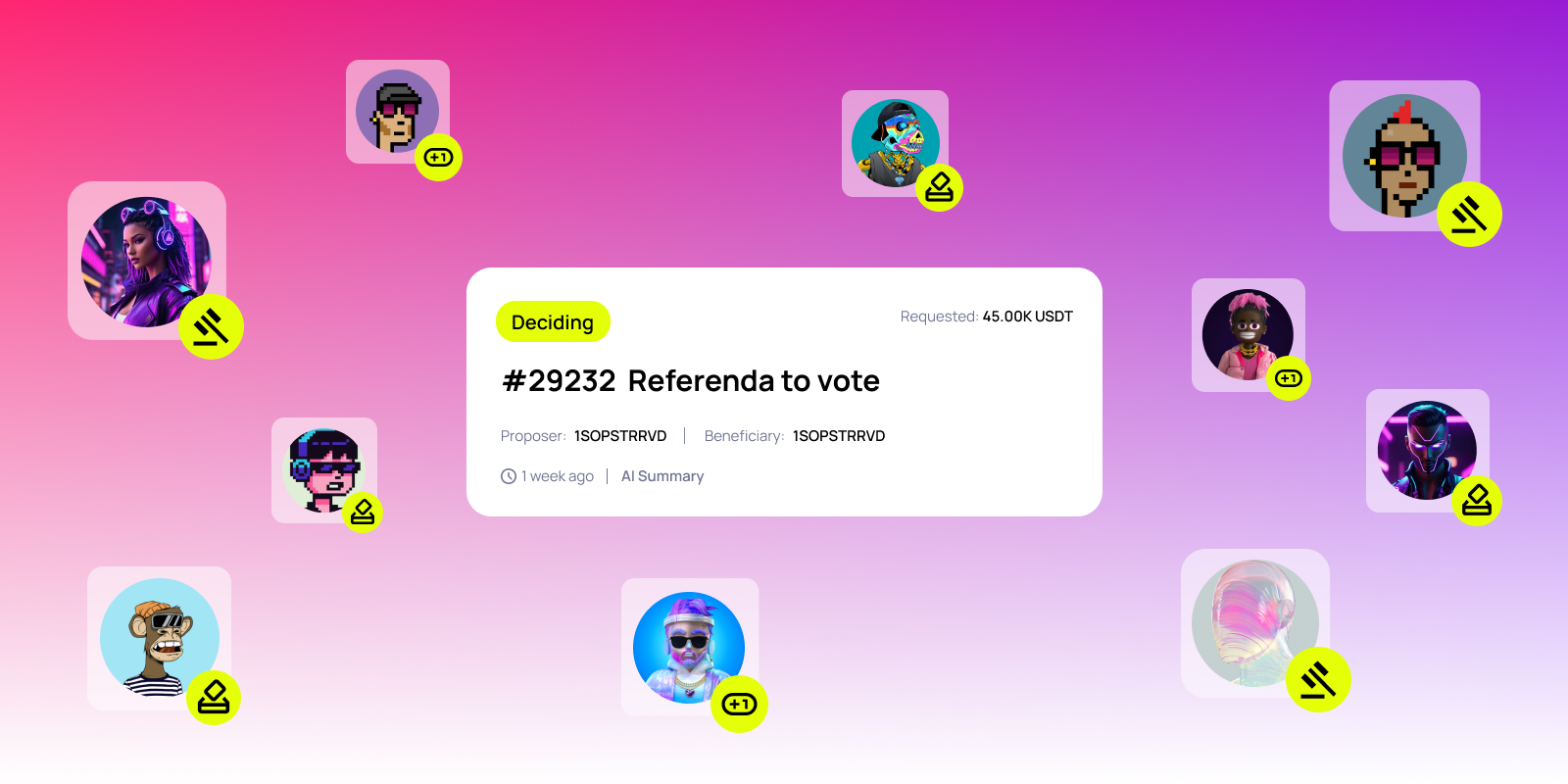
Any change to Polkadot’s technical structure, organization, or financing, has to go through OpenGov, which is accessible to every token holder. Every DOT holder is entitled to go to OpenGov to submit proposals, including those requesting Treasury funds. Through this system, community members have the autonomy to bring their ideas to life, whether it’s hosting events, creating content, or launching campaigns. Since 2023, the DAO has created more than 1,000 OpenGov referenda.
Of course, this presents challenges in terms of consistency and cohesion. Bounties are one part of the solution, and they also lower the load on the voters by collecting themed proposals under single umbrellas. There is a marketing bounty, a UX bounty, an events bounty, and more. There may come a time in the future when all marketing proposals are fully covered by the marketing bounty, and so on.
An initial catalyst to establish Polkadot’s wider GTM ecosystem was the Decentralized Futures Program by the Web3 Foundation, which offered initial funding and support to core initiatives needed for the network’s growth. Almost 40 projects have been funded— 4 in marketing and 10 in business development. The initiatives by the Decentralized Futures Program, the bounties, and other coordinating efforts try to ensure the decentralized marketing efforts are both impactful and aligned with the broader ecosystem.
At the core of Polkadot’s decentralized marketing strategy is the Ecosystem Resource Center by Polkadot’s largest marketing initiative, Distractive. Think of it as a toolkit for the community with branding guidelines, messaging frameworks, and event planning kits. This resource hub ensures that even as marketing efforts are decentralized, they remain consistent and aligned with Polkadot’s vision.
Turning challenges into opportunities: transparency and data for continuous improvement
Decentralized marketing isn’t without its challenges. Ensuring cohesion across diverse campaigns can be tricky, and maintaining consistency and accountability in a decentralized framework is no small task.
“Without (big) data, you are blind and deaf and in the middle of a freeway.”
Improvements start with testing, measuring, and iterating. Reporting and measuring the ROI of marketing campaigns should be best practice, but that’s not typically the case in Web3. Ethereum’s treasury was drained by half a billion dollars over two years, and it was barely noticed. At Polkadot, a reporting framework was established to evaluate the effectiveness of marketing initiatives and individual campaigns. This allows the community to turn the challenges of decentralized marketing into opportunities, by looking at each campaign as an experiment to learn from.
Community-driven marketing allows teams to respond quickly to changing market dynamics. It fosters innovation, encourages experimentation, and ensures that Polkadot’s message is authentic and resonates deeply with its audience. By leaning on open-source principles and the collective intelligence of its community, Polkadot has created a system that’s not only resilient but also incredibly agile.
The power of grassroots marketing
One of Polkadot’s greatest strengths is its ability to turn its community into a collaborative marketing powerhouse. By giving its members the tools and freedom to create their own campaigns, Polkadot fosters a sense of ownership and belonging. This grassroots approach doesn’t just increase brand awareness; it strengthens the bond between the project and its supporters.
A decentralized marketing blueprint for the Web3 world
Polkadot’s decentralized marketing model is more than just an innovative strategy; it’s a game-changer for the entire Web3 space. By equipping its community with resources and support, Polkadot demonstrates how decentralized ecosystems can thrive. The result? A marketing engine that not only drives results, but is also deeply rooted in collaboration and innovation.
It all starts with the intention, particularly as the initial decision-making in Web3 projects is usually centered in the foundation or the “labs,” i.e., the company building the tech. Doing things “the easy way” and falling back to centralized processes creeps in so easily that the goal of decentralization needs to be top-of-mind at all times.
For other blockchain projects looking to activate their communities and embrace decentralization, Polkadot offers a powerful template. It’s proof that by empowering your ecosystem, you can achieve growth, foster innovation, and create a truly resilient, community-driven organizational model.
About Dr. Natalie Tillack
Dr. Natalie Tillack is a Web3 marketing strategist and leader. She has worked in the Web3 space since 2018. As Head of Product Marketing at Parity, she is currently responsible for the GTM, the strategic positioning, and the product launches of Polkadot and its products. With So So Scaled!, which she co-founded in July this year, she brings growth and marketing strategies into DAOs by embedding operations closely within the existing ecosystem. While at McKinsey's Berlin office, she focused on growth, product, and marketing strategies in the digital space. In 2016, she obtained her PhD in Computational Physics at Oxford University, where she modeled the quantum structures of magnetoelectric materials.