The evolution of digital ownership: How tokenization is transforming gaming, music, and beyond
Tokenization is redefining digital ownership in gaming and music, enabling players and artists to control their assets. With blockchain, NFTs, and Polkadot’s interoperability, digital economies are becoming more decentralized, secure, and accessible.
 By Joey Prebys•March 19, 2025
What you can expect
- A breakdown of what tokenized digital assets are and how they differ from traditional digital assets.
- Insights into how tokenization is transforming gaming and music, giving players and artists real ownership.
- A look at NFTs vs. fungible tokens and their roles in the digital economy.
- An exploration of Polkadot’s role in securing and scaling tokenized assets for long-term adoption.
- The future of digital ownership, including potential use cases for cross-chain interoperability and secondary marketplaces.
Ownership is evolving in the digital age. Tokenization is redefining how we own, trade, and secure assets—moving beyond speculation and unlocking real utility across industries.
At its core, tokenized digital assets use blockchain to establish verifiable, transferable, and programmable ownership models. This is already transforming music and gaming, where artists and players are gaining true control over their work and purchases. But this is just the beginning.
With Polkadot at the foundation, a more fair, transparent, and decentralized digital economy is emerging–one where ownership is real, counterfeits are impossible, and value is fairly distributed.
What are tokenized digital assets?
Digital assets are everywhere—from the music we stream to the items we collect in video games. A song on Spotify, a Fortnite skin, or a digital movie purchase on Amazon all exist as digital assets. However, these assets are confined to the platforms that distribute them, meaning users don’t truly own them. You can’t sell a Spotify song, trade a Fortnite skin outside the game, or transfer a purchased movie to a different video player.
Not all digital assets are created equal. While traditional digital assets remain locked in closed ecosystems, tokenized digital assets exist on a blockchain, making ownership verifiable, transferable, and secure across different platforms. This shift is transforming industries like gaming and music, where tokenization gives artists and players real control over their assets.
Digital assets vs. tokenized digital assets
- Digital assets: Exist in closed systems, meaning ownership and transferability are restricted by platforms.
- Tokenized digital assets: Blockchain-based, transferable, and verifiable, turning static digital goods into true, onchain assets.
For example, in NFL Rivals, player cards and jerseys aren’t just in-game skins locked within a single platform—they’re tokenized assets minted on Polkadot’s Mythos blockchain. This allows players to own, trade, and verify their assets securely, with every transaction recorded transparently onchain. By leveraging Polkadot’s scalability and shared security, NFL Rivals ensures that digital ownership is real, transferable, and protected from counterfeits.
NFTs vs. fungible tokens: Key differences
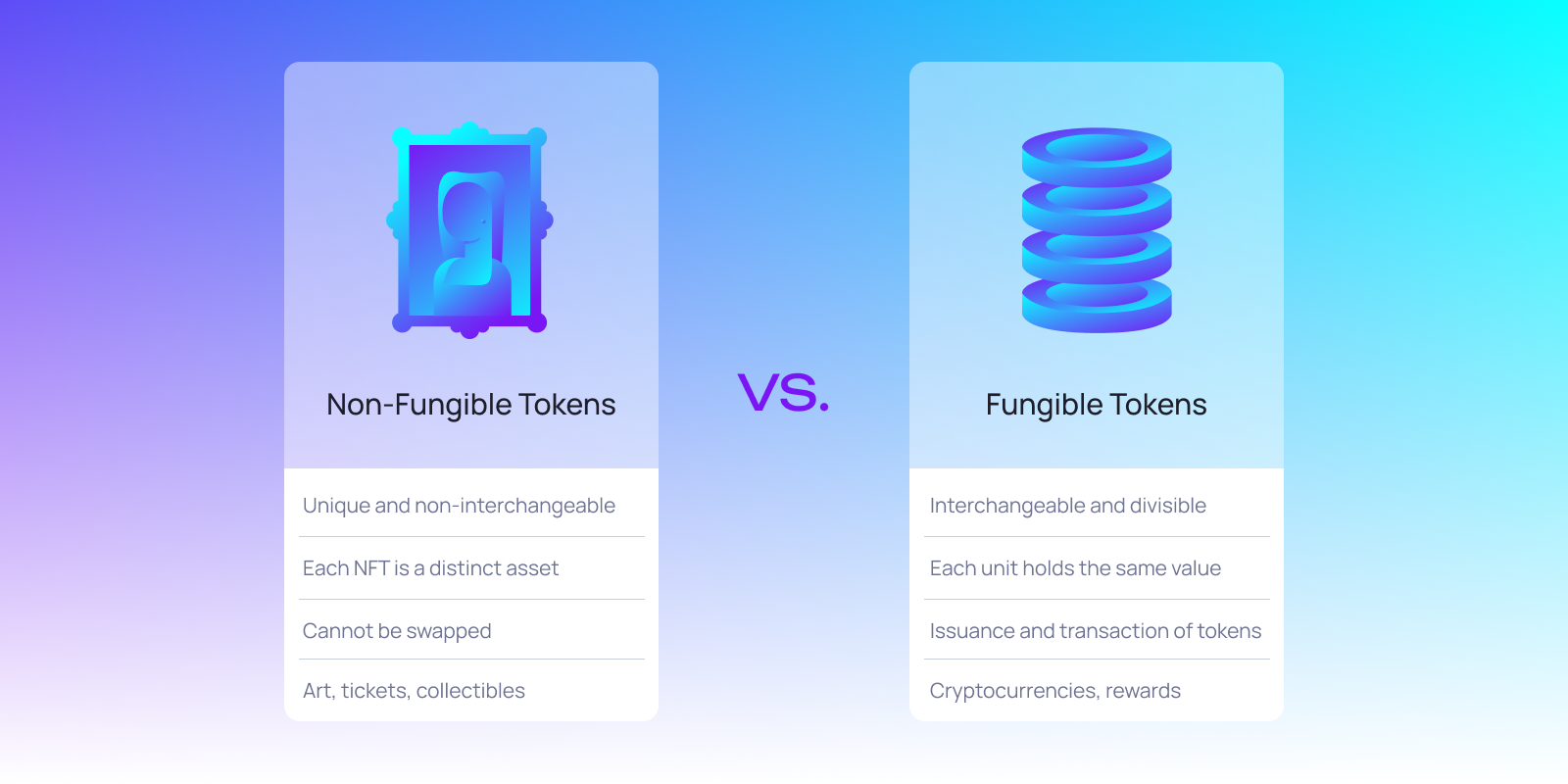
Tokenized digital assets fall into two main categories:
- NFTs (Non-fungible tokens): Unique, non-interchangeable assets with verifiable onchain ownership. Each NFT represents a distinct item, such as a rare game item or a music track.
- Fungible tokens: Interchangeable and divisible assets like cryptocurrencies and in-game currencies. One unit holds the same value as another, making them ideal for payments and rewards.
Think of it like this: NFTs are like limited-edition collectibles, while fungible tokens function like digital cash.
How tokenized digital assets are transforming gaming and music
Gaming: True player ownership
For decades, gaming economies have been one-sided—players buy in-game items, but they never really own them. Tokenized digital assets change that, allowing players to own and trade their in-game items freely.
User story: A gamer’s fight for true ownership
Alex has spent hundreds of dollars on in-game items across multiple games, only to lose access when servers shut down or accounts were banned. With tokenized gaming assets on Polkadot-powered platforms, Alex now truly owns his digital purchases, can trade them on open marketplaces, and even use them across compatible games—transforming his digital goods from temporary rentals into valuable, permanent possessions.
Take the NFL Rivals example from above. Unlike traditional games where items are locked within a single platform, this game tokenizes player cards and jerseys using blockchain. This same concept is being applied across other gaming projects, where tokenized assets ensure players have true ownership of their in-game items.
Other Polkadot-based games like Evrloot, a dark fantasy RPG, and Exiled Racers, a racing game using NFT-based vehicles, take this further by allowing players to fully own, trade, and upgrade NFT-based heroes, vehicles, and gear. These projects demonstrate how blockchain-powered ownership is shifting control from centralized game publishers to players, enabling real economies where interoperable assets retain value beyond a single game.
This means:
- Players own their assets, with every transaction recorded transparently onchain.
- Items can be traded, sold, or transferred, creating a player-driven economy.
- Fraud and counterfeits are impossible, ensuring fair play and true ownership.
With Polkadot’s shared security and scalability, these games create a trustless, transparent gaming economy where players—not platforms—hold the power.
Remix culture and user-generated content
Tokenization also transforms how gamers interact with intellectual property. In traditional gaming, companies tightly control their IP, often restricting player creativity and monetization opportunities. With tokenized assets:
- Players can create, own, and sell modified versions of in-game items, with smart contracts automatically attributing and compensating original creators.
- Game developers can establish clear parameters for what's allowed while enabling remix culture to flourish.
- User-generated content becomes verifiably unique, with transparent attribution chains that track the evolution of creative works.
This model encourages innovation while respecting IP rights, creating a collaborative ecosystem where both original creators and remixers are fairly rewarded for their contributions.
Music: Ownership beyond streaming
The music industry has long suffered from intermediaries controlling distribution and monetization. Tokenized digital assets are changing that by giving artists and fans true ownership.
User story: An artist’s direct connection to fans
Maya, an independent musician, used to earn fractions of a cent per stream on traditional platforms. Now, by minting her music as NFTs on a Polkadot-powered platform, she sells limited edition digital albums directly to fans, receiving fair compensation upfront and ongoing royalties from secondary sales. Her fans don't just stream her music—they own a piece of it, creating a direct artist-to-fan relationship that benefits everyone except the middlemen.
Platforms like Polkadot-backed Beatport, allow artists to mint music as NFTs, enabling:
- Direct ownership and sales, bypassing streaming platforms.
- Fans to purchase, trade, and collect unique music assets.
- Automated royalties through smart contracts, ensuring artists are fairly compensated.
Behind the scenes, PMEI (Polkadot Music Events Initiative), a nonprofit backed by the Web3 Foundation, supports music teams building the tools that make stories like Maya’s possible. By partnering with projects like mufi and Billfold, PMEI helps bring onchain ownership and fan engagement to life—online and onstage.
Reclaiming the masters: IP rights revolution
Perhaps most transformatively, tokenization allows musicians to maintain ownership of their masters—the original recordings of their work. No need to re-record an entire discography just to take back control (Taylor’s version, anyone?). Historically, record labels have owned these masters, controlling how the music is used and collecting the majority of royalties. With blockchain-based ownership models:
- Artists can tokenize their masters as NFTs, maintaining creative control while selling fractional ownership to fans and investors.
- Smart contracts can automatically distribute royalties when music is used in commercials, films, or samples.
- Musicians can set their own terms for licensing, sampling, and remixing, creating flexible IP frameworks that promote creativity while ensuring fair compensation.
Instead of renting access to music, tokenization makes true ownership possible—both for creators and consumers—while fundamentally rebalancing IP rights in favor of the artists who create the work.
Core benefits of digital asset tokenization
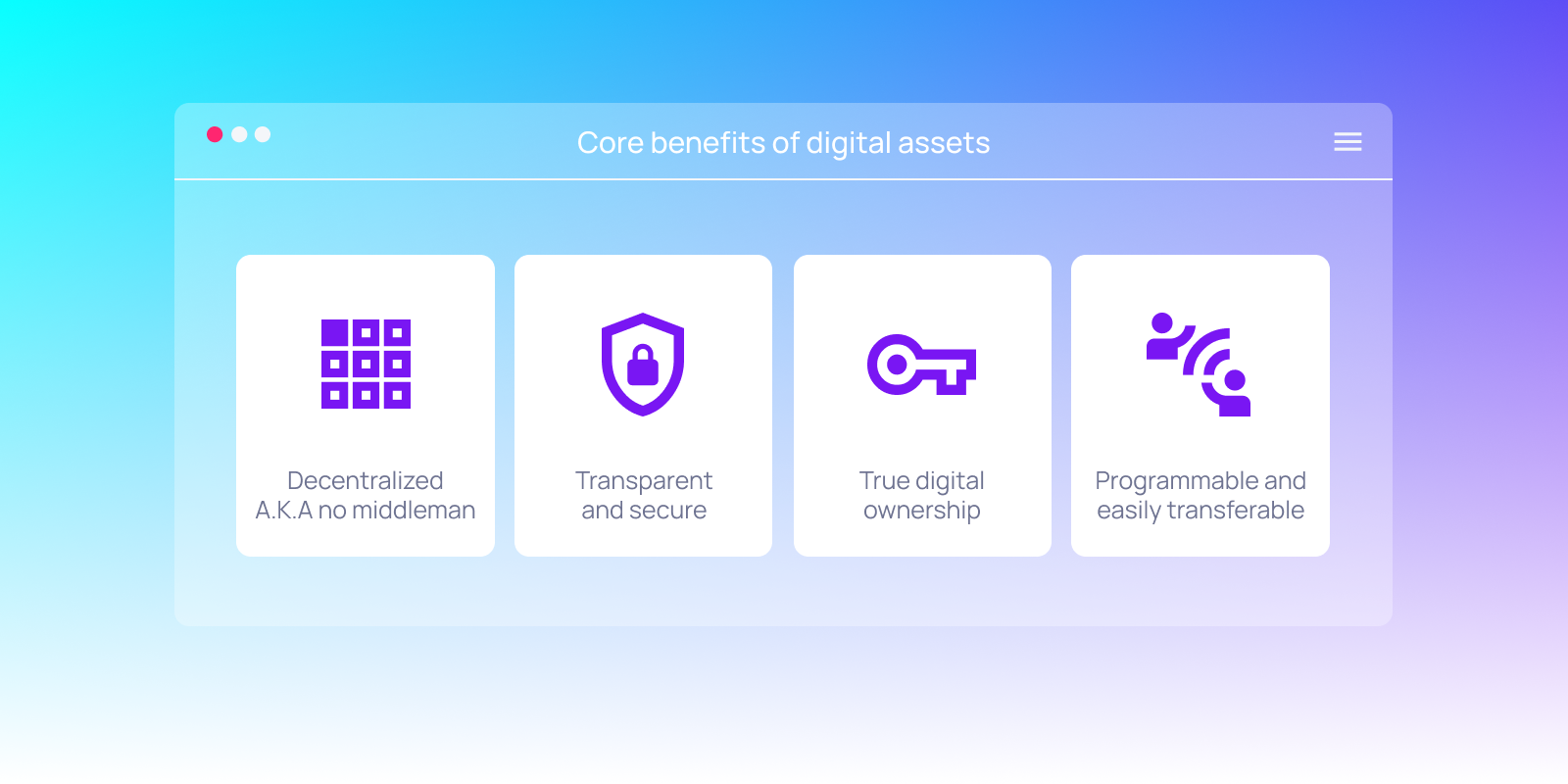
The power of tokenization lies in its ability to make digital assets secure, freely transferable, and fraud-resistant—without the need for intermediaries. This shift, rooted in decentralization, is what makes blockchain technology so transformative.
How does blockchain enable digital ownership?
Traditional digital assets exist within centralized systems that can restrict, alter, or even revoke ownership at any time. In contrast, tokenized digital assets live on blockchain networks like Polkadot, where ownership records are immutable and verifiable. Every transaction is permanently recorded onchain, ensuring authenticity and providing a transparent history of ownership.
What are the benefits of decentralized ownership?
By removing intermediaries, tokenization empowers individuals to fully own, trade, and monetize their assets without platform restrictions or third-party interference. Whether it’s in gaming, music, or other industries, blockchain ensures that value flows directly to creators and users rather than being captured by centralized entities.
Why is tokenization transformative?
Unlike static digital assets, tokenized assets are dynamic, programmable, and interoperable—unlocking new possibilities for digital economies. Smart contracts can automate royalties, enable cross-platform compatibility, and create more liquid marketplaces. This is already changing how artists monetize music, how gamers interact with virtual economies, and how digital ownership is redefined in a more transparent and equitable way.
With Polkadot at the foundation, tokenized digital assets are not just a technological advancement—they represent a paradigm shift in how we define ownership, value, and participation in the digital world.
Why Polkadot? Interoperability as the future of tokenized digital assets
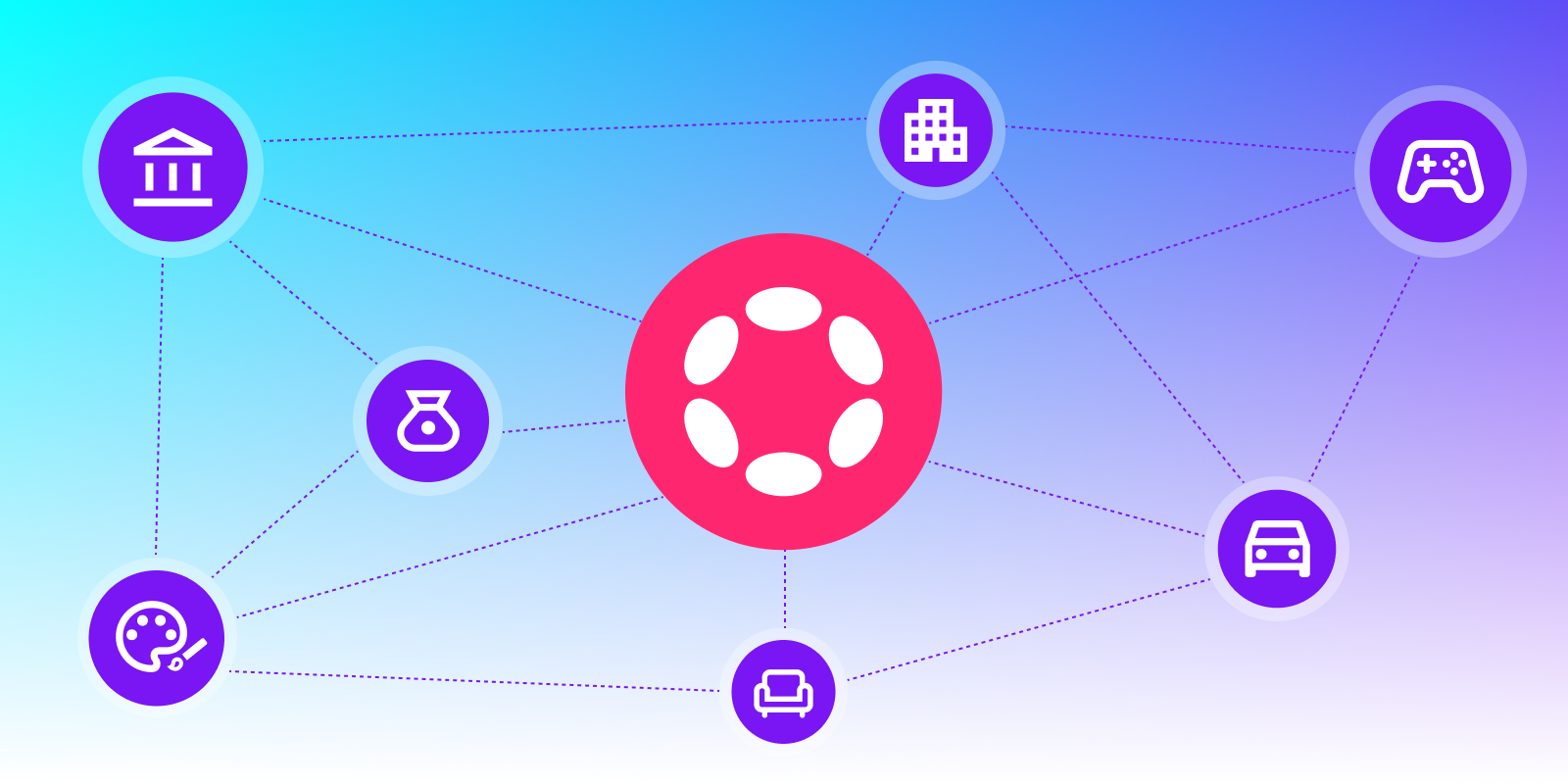
For digital ownership to reach its full potential, tokenized assets need to move freely between platforms and applications, not remain locked within a single ecosystem. Imagine buying a rare in-game skin and being able to use, sell, or trade it across different gaming worlds—or owning a music track as an NFT and seamlessly accessing it on multiple streaming services.
While today’s gaming and music industries haven’t yet widely adopted cross-chain asset transfers, Polkadot’s infrastructure ensures the technology is ready when they do. Just as Polkadot-powered games like NFL Rivals give players real ownership of their assets, future interoperability could allow them to trade those assets across multiple marketplaces and platforms, rather than being restricted to a single game.
How does Polkadot support NFT interoperability?
Polkadot’s cross-consensus messaging (XCM) allows assets to move securely between different Polkadot-connected rollups without needing external bridges. This technology enables:
- True asset mobility: In-game items can be used across multiple titles or marketplaces, rather than being locked within a single platform.
- Expanded trading opportunities: Players and collectors can have more ways to buy, sell, and transfer NFTs across different platforms.
- New business models: Digital goods aren't restricted to one platform but could integrate with various applications, unlocking new economic opportunities.
Why Polkadot for cross-chain digital ownership?
Tokenization is only as powerful as the networks that support it, and Polkadot is purpose-built to unlock the full potential of digital assets. By breaking down silos and enabling seamless transfers across ecosystems, Polkadot is creating a scalable, secure, and future-ready foundation for a more open and integrated tokenized economy.
With its scalable rollup infrastructure, advanced security, and interoperability via XCM, Polkadot equips users with the tools needed for secure digital ownership and frictionless asset transfers. As secondary marketplaces develop, this interoperability will be essential—allowing players, artists, and collectors to maximize the utility of their assets across many ecosystems.
By choosing Polkadot, players, fans, and creators gain access to:
- A secure, decentralized network: Ensuring ownership records are immutable and fraud-proof.
- Interoperability through XCM: Enabling future cross-chain asset transfers as use cases expand.
- Scalability for growing digital economies: Supporting seamless transactions as tokenization adoption increases.
As industries embrace on-chain ownership, Polkadot isn’t just supporting this transformation—it’s shaping the infrastructure for the digital economy of tomorrow. Whether in gaming, music, finance, or beyond, tokenized assets are changing how we think about ownership, and Polkadot is building the foundation for what comes next.
The future of ownership
As tokenization expands beyond speculation the need for robust decentralized infrastructure becomes clear. Unlike traditional digital assets that rely on centralized platforms, Polkadot’s architecture ensures that tokenized assets are verifiable, tamper-proof, and fraud-resistant. Every transaction and ownership record is permanently stored on a decentralized network, making counterfeits and unauthorized changes impossible.
Today, tokenization is bridging the gap between physical and digital ownership— enabling assets like art, real estate, and luxury goods to be digitally represented and traded securely. While gaming and music are leading the charge, this technology is rapidly expanding into other areas. In an upcoming blog, we’ll explore real-world asset (RWA) tokenization and the critical role of decentralized infrastructure (DePIN) in accelerating this shift.
With Polkadot’s scalable rollup infrastructure, advanced security, and cross-chain interoperability, it’s not just supporting tokenization—it’s building the foundation for the digital economy of tomorrow.