
Is large-scale, high-quality Web3 education possible?
The Polkadot Blockchain Academy (PBA) is taking Web3 education to the next level with PBA-X, an online course crafted to deliver high-quality blockchain knowledge at scale. Learn how we’re preserving educational standards, fostering a global community, and creating new opportunities for learners everywhere.

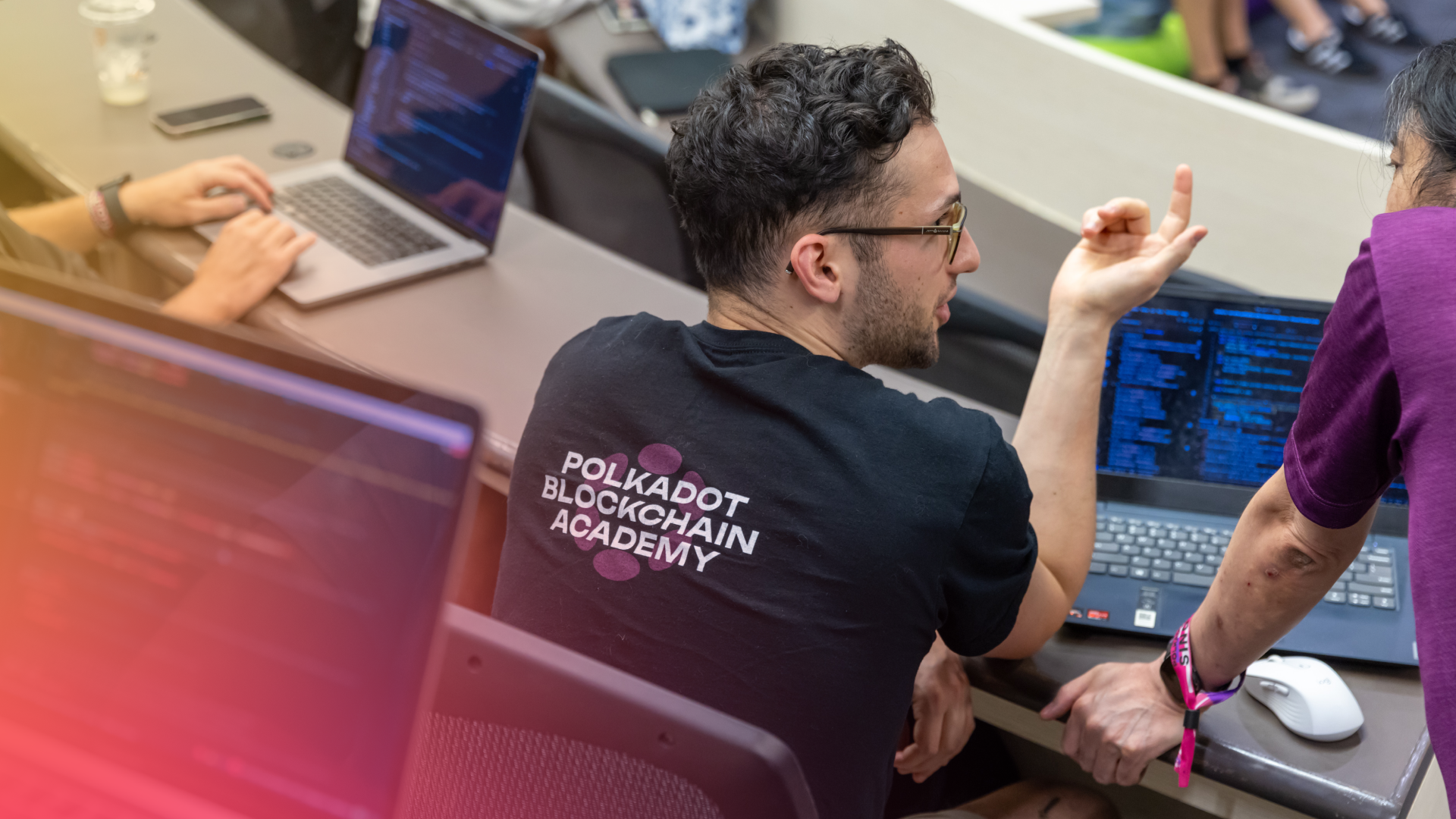
When we launched the Polkadot Blockchain Academy (PBA) in the spring of 2022, we were adamant about running an in-person program to guarantee a best-in-class, immersive experience. We wanted to create a space where students could fully engage with the program, interact closely with faculty, and connect with peers.
This setup sparked meaningful interactions—late-night conversations, collaborative weekends, and friendships formed through shared experiences. It also allowed hiring managers to see candidates beyond their profiles and code, observing them in real-life scenarios as both developers and individuals.
Expanding PBA to an online format with PBA-X
As we now move to reach more students through online learning, we are focused on one key question: How can we preserve high-quality educational standards and experiences when moving to an online format?
After five successful cohorts and over a hundred graduates contributing to the ecosystem, we’re ready to introduce a new approach with PBA-X, an online course designed to broaden access and scale our impact.
Why move online?
1. Expanding access without compromising quality
Each PBA cohort has been oversubscribed, and our capacity to accommodate talented candidates has been limited. As the Polkadot ecosystem continues to grow, the demand for skilled developers is outpacing the availability of in-person seats. By moving part of the curriculum online, we can increase our reach to an unlimited classroom, meeting the rising need for blockchain expertise worldwide.
2. Making education accessible to more learners
Even with full Treasury subsidies, the costs of participating in an extended in-person program are prohibitive for many. Few students can dedicate five weeks to focused learning without any family or professional obligations. Online learning allows more flexibility, reaching those who would otherwise be unable to participate, all without compromising the quality of education.
3. Delivering cost-effective, high-quality content
In-person programs are resource-intensive, and while we value the investment, moving online offers a way to scale cost-effectively. PBA-X lets us share our curriculum with a broader audience without increasing costs, making high-quality blockchain education accessible to a wider range of learners.
Preserving quality in an online format
Maintaining high quality is key to scaling deeply technical content, like the PBA curriculum. We’re drawing inspiration from successful online programs, such as Harvard's CS50, which has engaged over 6 million online learners in its Introduction to Computer Science course, and Carnegie Mellon’s LearnLab, which has demonstrated the effectiveness of well-designed online education.
Studio-quality, structured learning modules
The introductory PBA content is filmed in a high-quality studio and organized into structured modules with activities and self-learning exercises. PBA-X will incorporate best practices for massively open online courses (MOOCs) to ensure instructional content remains as effective online as it has been in person.
Nurturing an online community
One of PBA's highlights has been the opportunity for students to connect with Polkadot builders and their peers. Transitioning online, we’re committed to preserving these connections. While the spontaneity of in-person interaction is irreplaceable, we’re designing PBA-X with:
- Group conversations
- Online social events
- Code review meetings
Key moments like intake meetings and graduation nights will also be celebrated online to retain their significance and intensity. Web3 Foundation’s previous MOOCs on Blockchain, Web3, and Polkadot have shown strong interest, with over 16,000 enrollments over the past two years achieved without any marketing efforts. With PBA-X, we aim to build on this interest with a structured, high-quality course that engages a growing online community of blockchain learners.
Testing cohort-based learning
To ensure we deliver a high-quality online experience, we recently ran a pilot in Singapore. Fifty students joined our live lectures remotely, allowing us to test cohort-based online learning. The results were promising, with an impressive 80% completion rate for a one-month, full-time course—well above the industry standard for online courses.
Opening doors to broader learning
PBA-X will offer foundational knowledge designed for anyone interested in learning about blockchain, from budding developers to Web3 enthusiasts. This way, we broaden our learner base while preparing those who want to advance into the specialized PBA Campus course.
PBA-X has been purpose-built for online delivery, featuring:
- Professionally shot tutorials
- Live lectures (available on-demand)
- Multiple-choice assessments
- Teaching assistants
- Flexible office hours
Every element has been crafted to retain quality while making the content engaging and manageable for online learners.
Web3 learning for a global community
The launch of PBA-X marks an exciting new chapter in our story. While our in-person programs have set a high bar for Web3 education, we knew we could dream bigger. By bringing the PBA curriculum online, we're throwing open the doors to passionate Polkadot learners worldwide without losing the technical depth and community spirit that make PBA special.
This is just the beginning. Every graduate strengthens Polkadot's ecosystem, whether they're launching new chains, building innovative dapps, or contributing to core protocol development. Sign up and discover how PBA-X can equip you with the skills, connections, and expertise to make an impact in Web3 and contribute to Polkadot’s evolving network.
About the authors
Radha Dasari is the Technical Education Lead at the Web3 Foundation. Formerly a faculty member at the University of Vermont’s Computer Science Department, he has extensive experience designing and instructing online courses at scale, including Computer Vision Basics on Coursera and blockchain courses on edX.
Pauline Cohen Vorms is the co-founder and CEO of the Polkadot Blockchain Academy. With a background in both consumer and enterprise education as Chief Business Officer at Holberton Schools and Strategic Manager at Coursera, she now drives the training of future blockchain leaders at the Polkadot Blockchain Academy.