Polkadot 2.0: The rebirth of a network
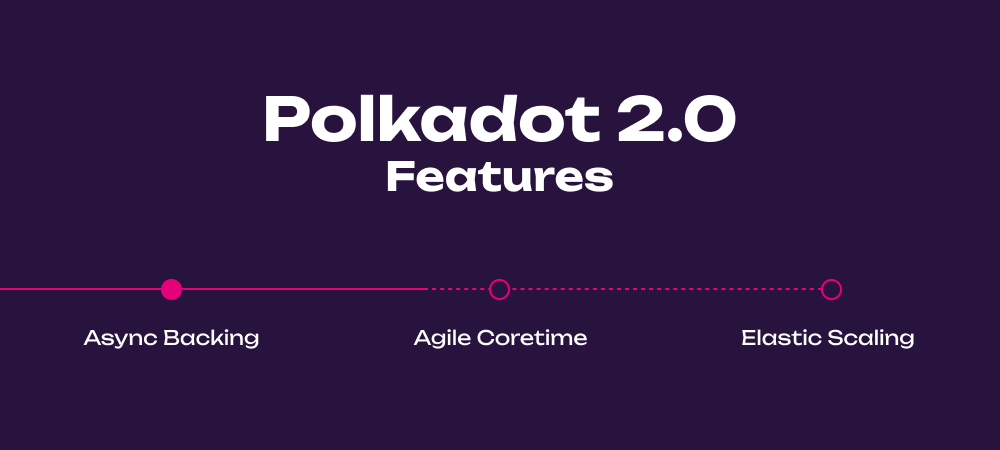
Polkadot 2.0 reimagines blockchain with a bold rebrand and powerful features: Agile Coretime, Async Backing, and Elastic Scaling. Step into a more flexible, faster, and scalable network. Learn about the improvements and changes that led to this next era of Polkadot.

In a world where digital networks often feel out of reach, control has typically been concentrated among a select few, leading to choices that everyday users have little influence over. This often results in a disconnect between the needs of those who actually use and create value for the network, and the direction it takes. Polkadot is flipping the script by nurturing an ecosystem where community-driven actions replace top-down directives, ensuring the network evolves in harmony with the needs of its participants. Polkadot stands as a pioneer in blockchain, setting new standards and redefining what it means to be truly decentralized.
Polkadot is poised for massive transformation over the next few months with the rollout of Polkadot 2.0. This update encompasses a slate of features and performance improvements that set out to enhance user experience, lower barriers to entry, and align development with market demands.
Already recognized for its leading technology, Polkadot is making it even easier for new projects to leverage its capabilities with the culmination of 2.0. This evolution enhances user engagement and simplifies developer onboarding, aligning the network’s growth with the aspirations of its community. However, appreciating Polkadot 2.0's impact starts with understanding the origins of Polkadot 1.0.
Genesis of Polkadot 1.0
Polkadot's journey began with a vision to create a heterogeneous multichain framework. This concept was first articulated in the original Polkadot Whitepaper published in November 2016 and reached a milestone moment at Decoded 2023, Polkadot’s annual flagship event. There, Dr. Gavin Wood announced the imminent release of the final codebase for Polkadot 1.0, marking the realization of that vision.
The completion of Polkadot 1.0 catalyzed rapid growth and development, achieving several key milestones:
- 50 diverse and interconnected chains expanded the ecosystem
- Over 200 projects utilized the Polkadot SDK to build blockchain solutions
- XCM release enabled cross-chain communication between independent blockchains
- OpenGov launch paved the path for an industry-leading, onchain decentralized governance platform
- The staking platform offered anyone holding DOT the opportunity to contribute and secure the Polkadot network
Most tellingly, Polkadot demonstrated robust decentralization with a Nakamoto coefficient of 93 at the time of the 2023 Decoded event. This foundation of success and decentralization set the stage for the next phase of Polkadot's evolution: Polkadot 2.0.
Journey to Polkadot 2.0
The Polkadot ecosystem has experienced significant growth since its inception. This expansion has been accompanied by a notable shift towards an increasingly community-led, onchain governance process, marking the 1000th proposal on July 16, 2024. This bottom-up decentralization has allowed Polkadot to develop organically, responding directly to the community’s needs.
Key milestones in this decentralization journey include:
- Decentralized Futures Program: Initiated by the Web3 Foundation, this 20 million USD / 5 million DOT program has awarded multiple Polkadot-focused teams with initial capital, kickstarting diverse ecosystem contributions.
- Decentralized Voices Program: A Web3 Foundation initiative that aims to empower community advocates by providing DOT allocations to amplify their governance efforts.
- OpenGov & Onchain Treasury: This shared resource for community-led proposals has become a launchpad for fresh ideas, activities, and innovations, fueling Polkadot's next growth phase.
A decentralization flywheel
Polkadot 2.0 marks a transformative moment in the network's journey, bolstering a self-sustaining cycle of accessibility, community engagement, and developer growth. This evolution underscores the power of Polkadot's onchain governance model, where users can directly shape the network's future. In May 2024, the DAO backed Referendum #747 with a 77% majority, which defined Polkadot 2.0 through key technical advancements like Asynchronous Backing, Agile Coretime, and Elastic Scaling, demonstrating the community's pivotal role in steering Polkadot's identity and direction.
Part 1. Next-level technical advancements
Polkadot 2.0 brings forth three key technical advancements designed to lower entry barriers and enhance accessibility for projects and builders. These features significantly improve the network’s scalability, cost, speed, and flexibility, encouraging the rapid growth of decentralized applications (dapps).
- Async Backing: This feature reduces block time from 12s to 6s and increases transaction throughput. It allows parallel transaction validation and 4x more data storage within each block, significantly boosting network capacity and performance.
- Agile Coretime: This feature allows dynamic core allocation for shorter durations through onchain purchases or secondary marketplaces like Lastic and CoreHub. This shift from the parachain slot auction model enables flexible, on-demand access to network computing resources.
- Elastic Scaling: This feature enables projects to dynamically utilize multiple cores simultaneously. Working alongside Agile Coretime and Async Backing, Elastic Scaling provides dynamic scalability and ensure projects can efficiently manage computing needs as they grow.
Part 2. Optimizing user experience
Beyond technical upgrades, the ethos behind Polkadot 2.0 encourages a reimagining of how users interact with the network. This transformation is guided by community insights and a fresh approach to branding that focuses on accessibility and user-friendliness.
The rebranding efforts are shaped by contributions from Distractive, a Decentralized Futures grant recipient and core Polkadot contributor, and include:
- A revamped website: Designed to be more intuitive and accessible, the new website simplifies interactions for users of all backgrounds
- Updated messaging framework: Approachable communications that reduce friction and clearly convey the concepts of blockchain and Polkadot to a wider audience
- Enhanced visual identity: New visual design takes inspiration from the vibrant interpersonal and collaborative elements happening within the Polkadot ecosystem
Polkadot 2.0 lays the groundwork for a future where everyone is invited to shape the network’s future. This people-first approach advances Polkadot's mission to be accessible to all and reinforces its position as a trailblazing digital ecosystem where innovation is driven by collective wisdom.
The dawn of a decentralized future
The impact of Polkadot 2.0 is already rippling through the wider crypto landscape. Industry leaders like Mythical Games, pioneers in blockchain gaming, have chosen Polkadot as their platform for groundbreaking projects such as NFL Rivals, the first blockchain game with an NFL license, and their Pudgy Penguins partnership. Similarly, Frequency, a cutting-edge decentralized social media protocol, has embraced the Polkadot ecosystem. The influx of innovative projects is complemented by a surge in ecosystem-led initiatives. Numerous projects and investment firms are launching their own grants and funding programs, including Scytale Digital’s recently announced Polkadot Ecosystem Fund, to fuel innovation on Polkadot.
While Polkadot 2.0 lays a robust foundation, it also paves the way for JAM, the next evolutionary leap in Polkadot's journey. This progression exemplifies the network's commitment to continuous improvement and true decentralization, built on years of community contributions, visionary guidance, and technical advancements.
As Polkadot pushes the boundaries of what's possible in blockchain technology, it invites developers, users, and enthusiasts from all walks of life to be a part of this transformative journey. Interested in learning more?
Explore the new Polkadot website and immerse yourself in this evolving ecosystem.