The Results are in
With a turnout just shy of one third of the tokens, the recent Polkadot redenomination poll was a major result for stakeholder decision-making. This number is all the more impressive considering that both the Web3 Foundation and Parity Technologies abstained from the voting.
 By Dr. Gavin Wood•July 27, 2020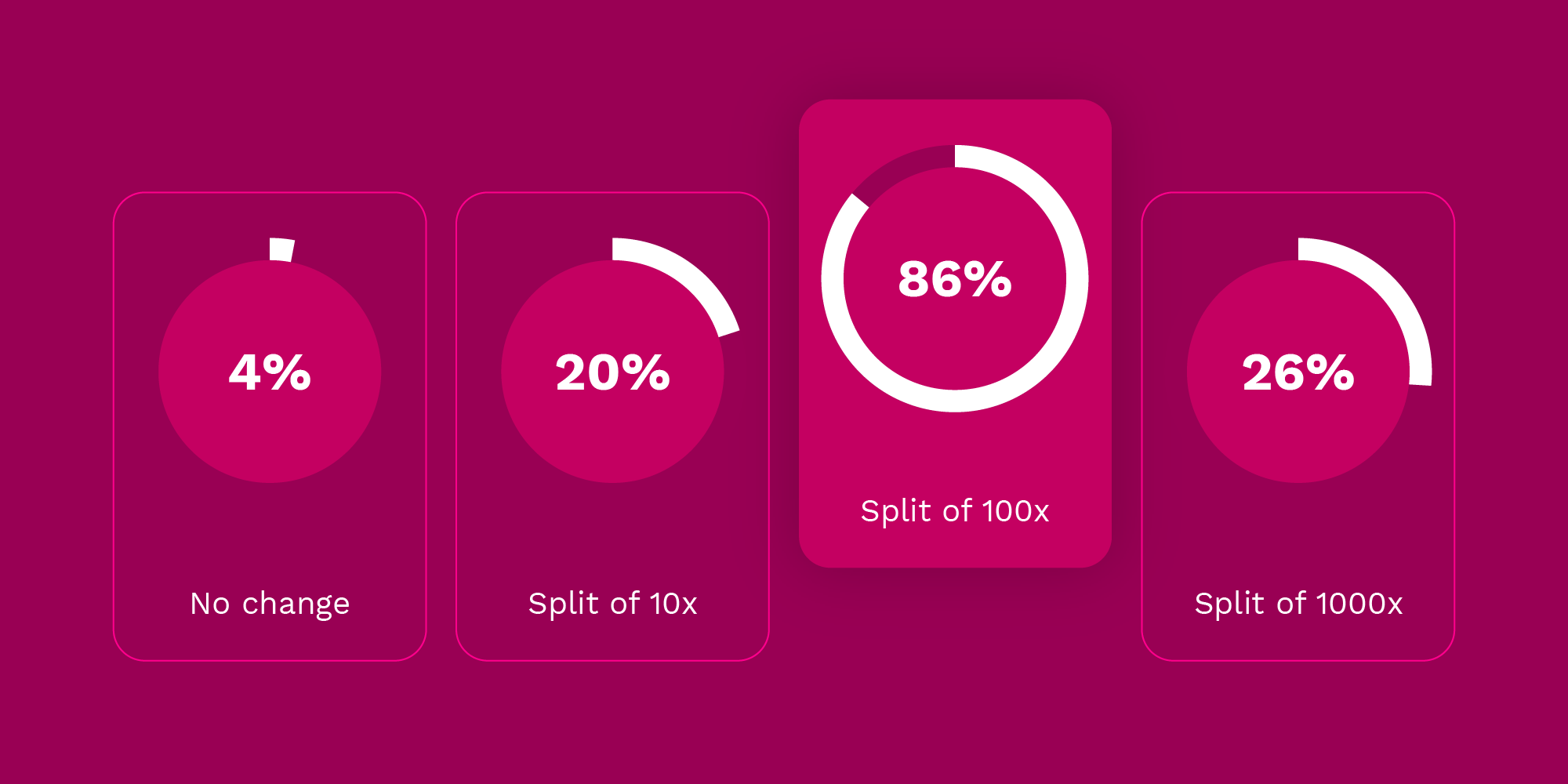
Two weeks ago we started the first vote on the fledgling Polkadot network. That vote has just ended and the results are clear.
With a turnout just shy of one third of the tokens, the recent Polkadot redenomination poll was a major result for stakeholder decision-making. This number is all the more impressive considering that both the Web3 Foundation and Parity Technologies abstained from the voting.
The poll itself was to determine the final “meaning” of the DOT token, specifically how many of the lowest denomination of Polkadot’s balances, the Planck, should constitute a single DOT. Four options were available and every DOT-holding account could vote for any combination of them.
The options were to: either keep the original 2017 sale meaning of DOT; or effect a “stock-split” of that token, creating a New DOT of which either ten, one hundred or one thousand would be equivalent to the original, old DOT.
After two weeks of voting, the results are clear: the community vastly favours a New DOT denomination which is defined as 10,000,000,000 Planck or, put alternatively, a “stock-split” of the original, old DOT by one hundred. Specifically, of the 2.86 million DOT that cast a vote, 2.47 million DOT (that’s 86%) voted in favour of this split. Only around 120 thousand (that’s 4%) voted to keep the old denomination.
Various reasons were given for each option, but the one that seemed to find the most attentive ears regarding the winning option seemed to be that it would result in a much more ergonomic DOT value. Given that the only named denomination which is lower than DOT is the Planck (and which is useless for any practical matters), then it does indeed seem reasonable to take a somewhat finer main denomination.
Next steps
As stated in the original article, the effects of this vote will not be felt immediately. Rather, to give the ecosystem time to prepare, the change in denomination will happen approximately 72 hours after DOT transfers become enabled. Outside of unexpected governance intervention, DOT transfers will begin at block #1,205,128, expected around 3pm Zug time (CEST, for those who don’t know where Zug is) on the 18th August, 22 days from now.
This means that Polkadot’s Denomination Day will be the 21st August, with it happening in Europe’s early afternoon, China’s evening and America’s morning. Specifically, it will be at block #1,248,328.
The Web3 Foundation will be working to ensure that everyone in the ecosystem is aware of the coming change, working with ecosystem service providers to minimise disruption during the transition time and providing technical assistance and advice to help those who need to prepare.
Denomination Day party, anyone?
If you are a service provider in the Polkadot ecosystem and are unsure what this means for you, please contact the Web3 Foundation at info@web3.foundation. You can watch the countdown to transfers on Polkadot.js. Chat about this and more on Riot/Element in the Polkadot Watercooler.