From speculation to sustainability: Top ETHDenver takeaways
ETHDenver 2025 highlighted Web3’s shift toward sustainability, emphasizing talent development, decentralized governance, and aligned incentives. Polkadot’s insights reinforced the industry’s move beyond speculation toward long-term, community-driven growth.

As ETHDenver 2025 wrapped, Polkadot ecosystem contributors and teams reflected on a noticeable shift in industry sentiment—one that emphasized long-term value creation over speculation. Conversations throughout the event revolved around building diverse teams for sustainable innovation, fostering resilient communities beyond memecoin hype, and aligning incentives for long-term engagement.
This year’s theme, The Year of the Regenerates, resonated through discussions about sustainable growth, responsible innovation, and the convergence of blockchain with emerging technologies. What began as a blockchain-focused event quickly expanded into broader conversations encompassing AI, finance, marketing, and robotics. For the first time, ETHDenver prominently featured robotics integration, hardware demonstrations, and AI tokenization models, signaling how blockchain is evolving alongside other breakthrough technologies. The event’s expansion beyond its Ethereum-centric origins further cemented ETHDenver’s role as a hub for the broader decentralized technology movement.
An evolving ETHDenver experience
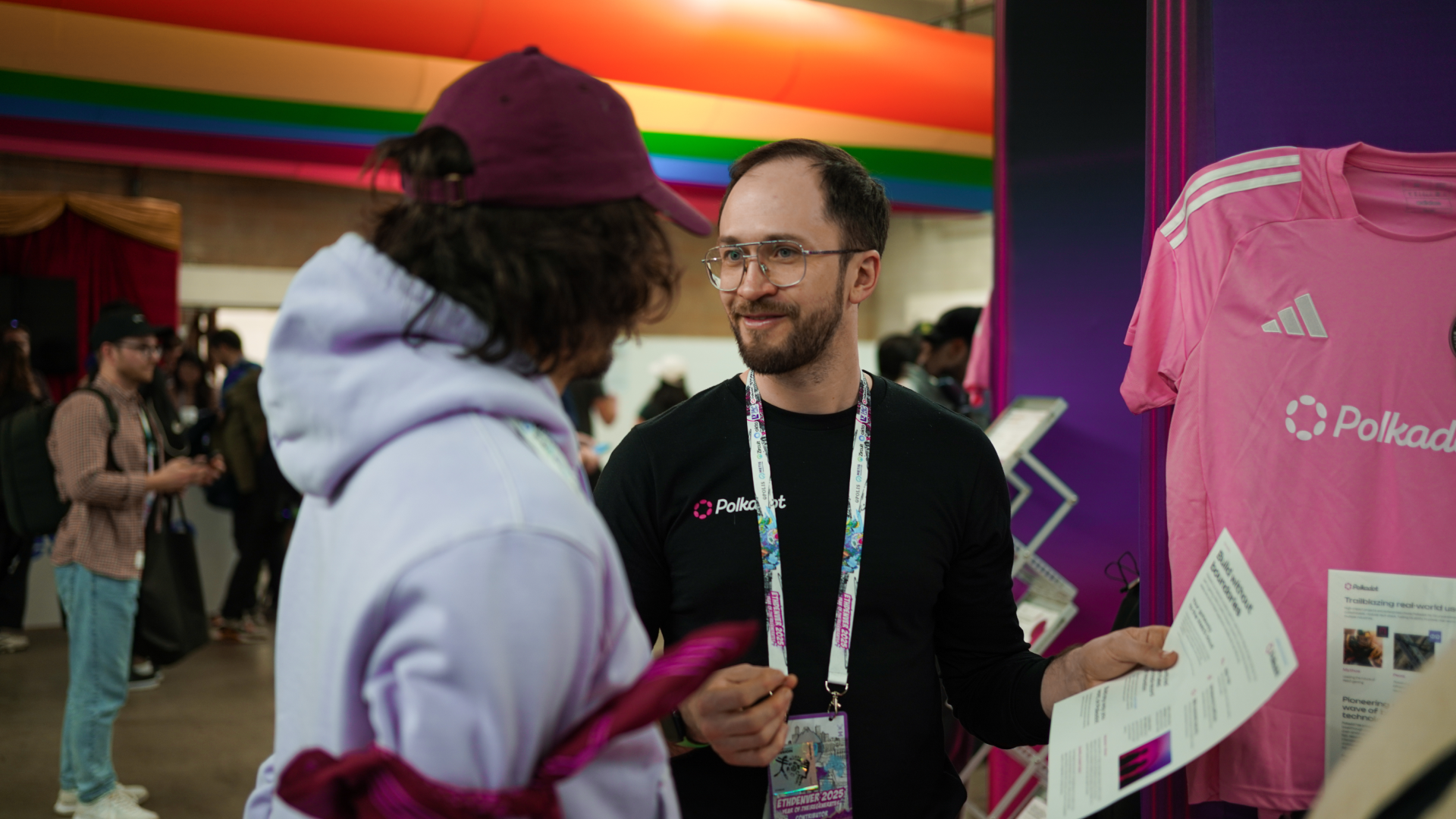
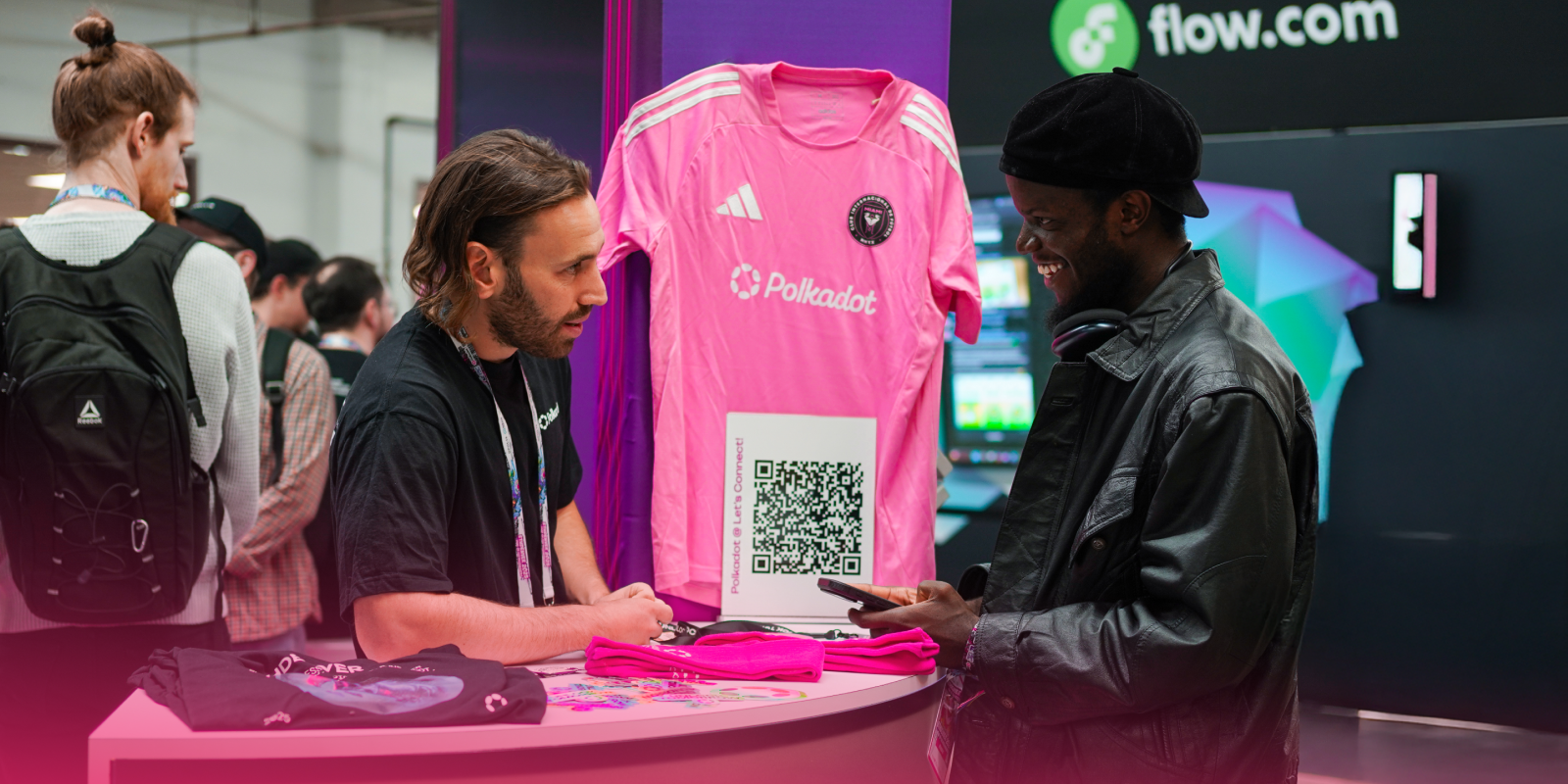
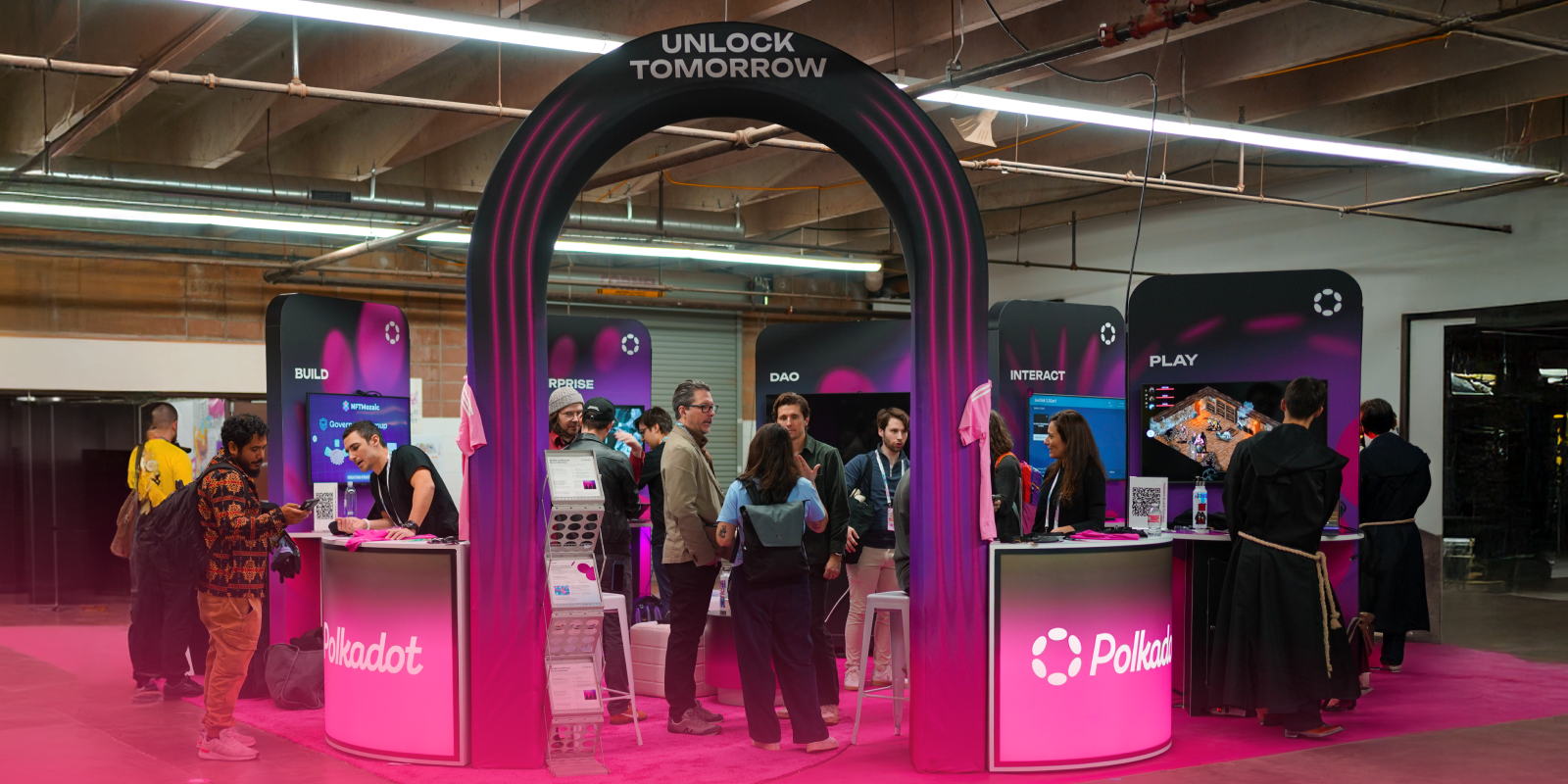
Polkadot maintained a dual presence throughout the week. At Spork Castle, our booth showcased the breadth of Polkadot’s ecosystem, from modular blockchain infrastructure to real-world use cases in gaming, governance, education, enterprise, and DeFi. Meanwhile, at the WebZero Blockspace Mansion, ecosystem teams and community members gathered for side events, hackathons, and cross-ecosystem pollination—including a Web3 Marketing Hackathon with The Defiant and a Mantle DeFi Meetup.
While ETHDenver 2025 showcased groundbreaking technology, some of the most pivotal conversations centered on something just as crucial—how Web3 cultivates its talent and strengthens its communities.
Rebuilding the tech talent pipeline
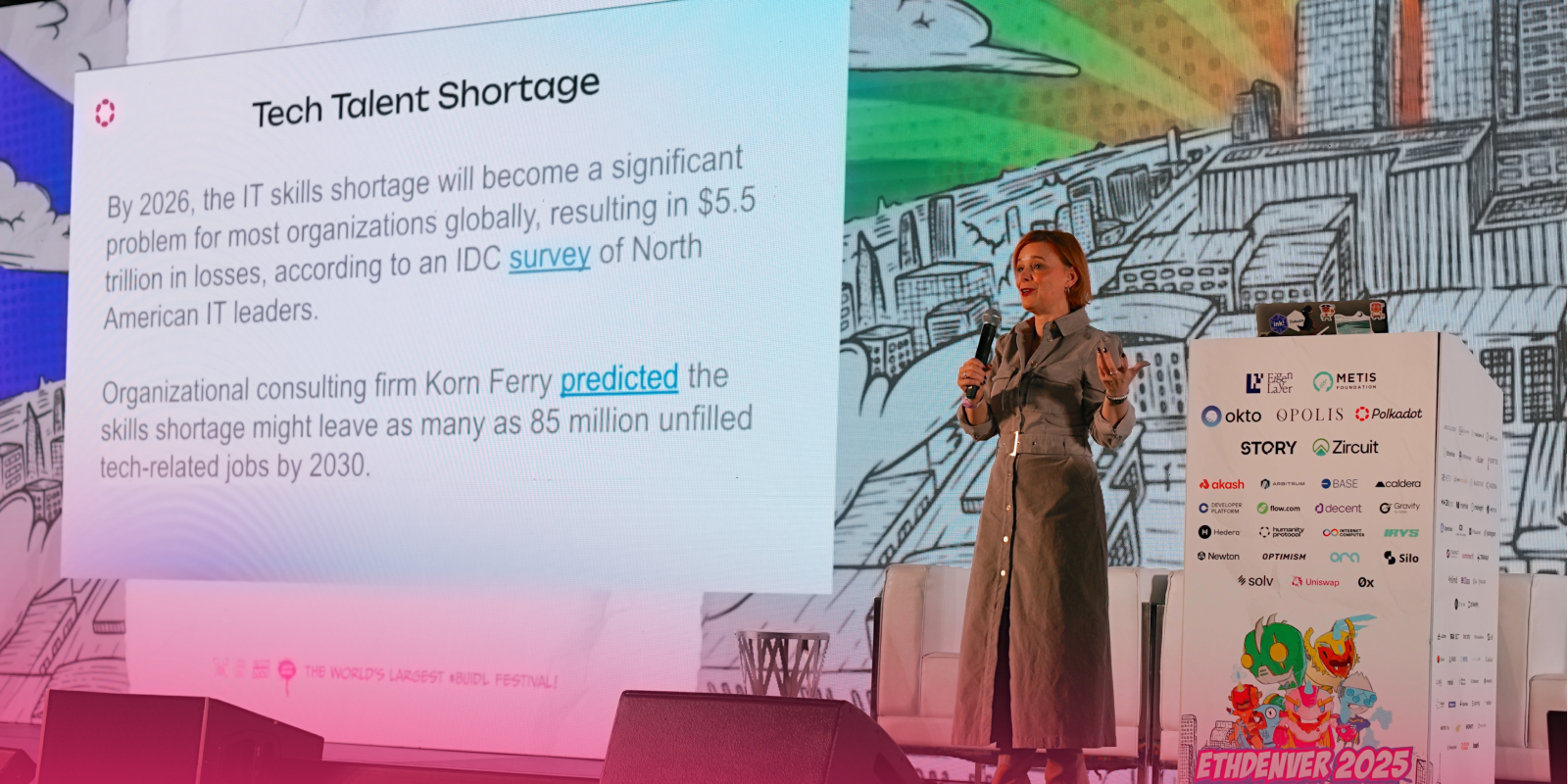
In a standout keynote address, Chrissy Hill, Chief Legal Officer and Interim COO at Parity Technologies, challenged the industry's approach to talent acquisition and retention. With 6 in 10 workers in the U.S. needing reskilling within the next 4 years, Hill argued that the blockchain industry cannot afford to limit itself to traditional talent pools.
“Innovation isn’t just about technology; it’s about the people who shape it,” Hill stated. “The strongest teams combine technical expertise with cognitive diversity. In an industry building for global adoption, homogeneous thinking isn't just a missed opportunity—it's an existential risk to the future of Web3.”
Hill introduced Framework 1002, a forward-thinking hiring model, also known as MII, an acronym for merit, innovation, and inclusion. By evaluating candidates through problem-solving challenges rather than traditional résumés, teams can better identify talent that brings unique thought and value rather than credentials. To reinforce her point, Hill cited research from the Max Planck Institute, which found that diverse teams consistently outperform homogeneous teams in innovation. Their research also highlighted a direct financial incentive for inclusion, demonstrating that teams with built-in diversity reduced user testing costs by up to 25% and created more intuitive, accessible products.
“We’re not just building code,” Hill emphasized. “We’re building systems that will reshape human interaction. The teams that build these systems must reflect the diversity of the world they aim to serve.”
Her talk was a wake-up call for the blockchain industry—a reminder that technology alone cannot build the future of Web3. The industry must invest in people just as much as protocols or risk stalling its own progress.
Creating resilient communities
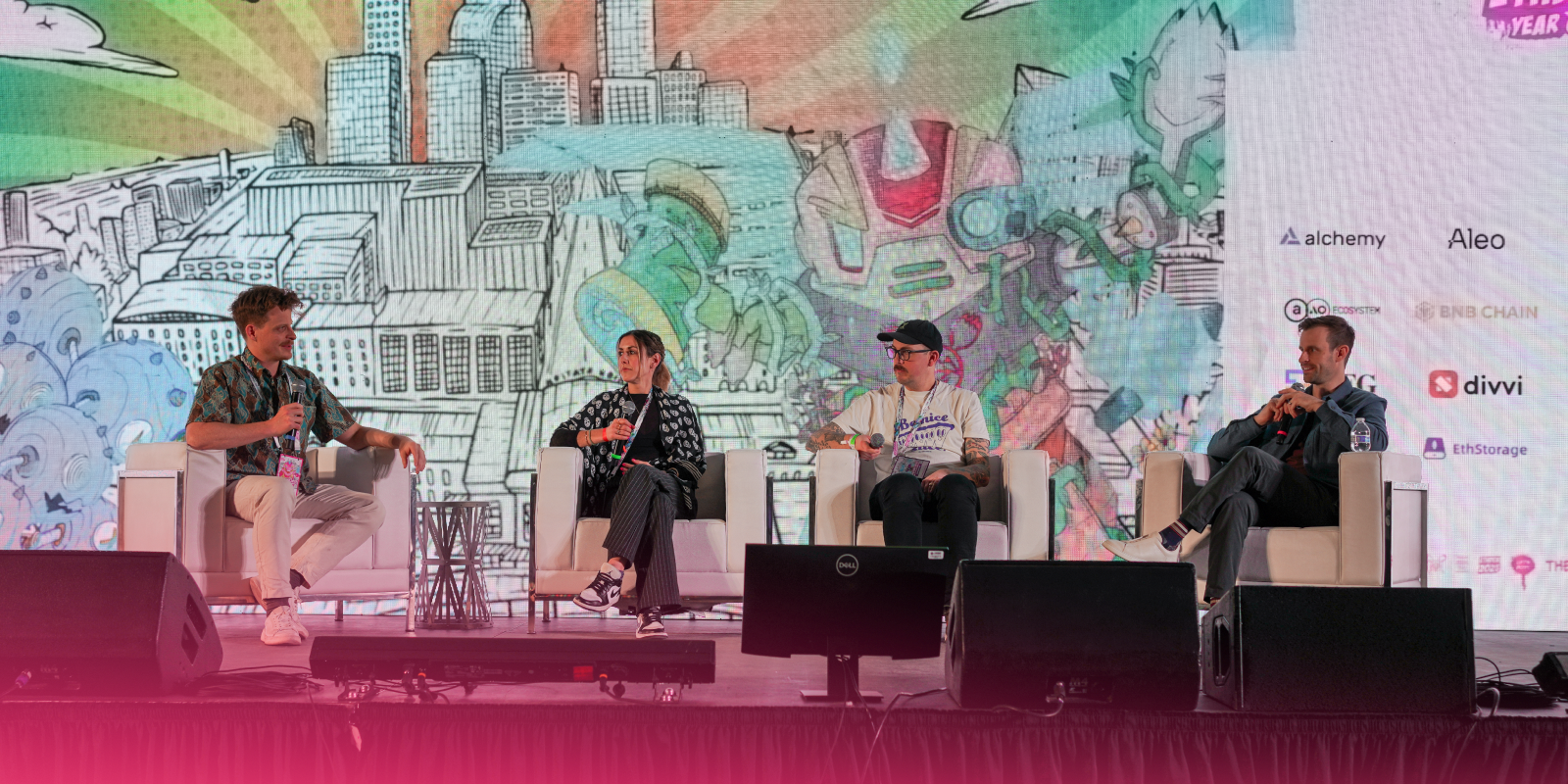
If Hill’s keynote challenged Web3’s hiring strategies, the Beyond Exit Liquidity: Community in Post-Memecoin Crypto panel explored how communities can mature beyond short-term speculation. Moderated by Jay Chrawnna of The Kusamarian, the discussion brought together Cameron Thacker, Co-founder & VP of Blockchain at Mythical Games, Lucy Coulden, Global Program Director, Polkadot, and Alex Bird, Polkadot Ecosystem Success Manager.
The panelists examined why many Web3 communities struggle with retention and how projects can foster meaningful engagement beyond financial speculation. Thacker, drawing from his experience in blockchain gaming, pointed out that successful projects are those that align incentives with deeper human motivations.
“Gamers play for joy, for challenge, for social connection—not primarily for speculation,” Thacker explained. “When incentives align with engagement rather than extractive economics, communities naturally sustain themselves.”
Drawing parallels between community building and Polkadot's governance model, Coulden explained, "Strong communities thrive when participants have genuine agency. Decentralized governance isn't just a technical feature—it's a fundamental social contract between a project and its community."
The panel highlighted how the most resilient Web3 communities are those that have transcended the initial hype to develop substantive value propositions, mirroring the evolution of the broader maturation of the blockchain space from speculation-driven engagement toward sustainable utility.
Takeaways for an enduring Web3
The intersection of talent development and community sustainability emerged as a unifying theme, reflecting the industry’s need for deeper structural commitments revealed in four key takeaways:
1. Talent and community sustainability are the next big challenges in Web3
Blockchain projects can no longer rely on speculation to attract and retain users. Sustainable growth requires strong participation models that give contributors real ownership and workforce strategies that prioritize talent development. Without these foundations, projects risk fading as quickly as they rise.
2. Web3 must align incentives beyond short-term gains
The most successful projects will be those that reward long-term participation rather than extractive behaviors. Sustainable ecosystems depend on value creation, ensuring that contributors and users remain engaged beyond financial incentives.
3. Decentralized ecosystem needs diverse participants
Inclusive governance strengthens ecosystems. Without diverse voices in governance, decision-making becomes insular and limits innovation. Including a broad range of perspectives ensures that blockchain networks serve a wider user base and remain adaptable over time.
4. Education and reskilling are key to workforces and communities
Blockchain innovation and ecosystem retention depend on education. Workforce reskilling programs will help close the talent gap, while community education initiatives will drive engagement in governance and ecosystem growth.
Built for the long haul
ETHDenver revealed a Web3 ecosystem that is increasingly defined by resilience, interdisciplinary collaboration, and structural maturity. As blockchain converges with AI, decentralized infrastructure, and traditional industries like finance, the industry must take a proactive role in designing sustainable ecosystems that empower new talent, amplify diverse voices, and create lasting utility.
As attendees departed, they carried with them not just technical insights but a renewed understanding that the longevity of Web3 depends on creating systems that are sustained by the diverse and decentralized communities that it serves.